AI visibility tools, compared
Updated 2026-09-28 · maintained by Unsourced
AI assistants now answer the questions your readers used to type into Google, and a new category of AI visibility tools has appeared to tell you whether you still show up. Most of them give you a score. Before you pick one, it is worth being clear about what actually matters, and what separates an estimate from evidence you can act on.
What are AI visibility tools?
AI visibility tools show you whether AI assistants like ChatGPT, Perplexity, Claude and Gemini mention or cite your brand when people ask questions in your space. Most report a visibility score estimated from sampled prompts; Unsourced instead records the evidence — the exact answer, whether your page was cited, and whether a verified crawler fetched it — so you can see and act on where you actually stand.
An estimate from sampled prompts. Cited in which answer? By whom? Did an AI actually read your page? The number can’t say — so when it moves, you’re guessing why.
The actual answer, the verified fetch behind it, and the exact topic where a competitor won instead — open it, check it, act on it.
What these tools are for
When ChatGPT, Perplexity, Google AI Overviews or Claude answer a question in your field, they choose a handful of sources. AI visibility tools, sometimes called GEO or AEO tools, exist to tell you whether you are one of them, the way SEO tools track your position in Google. The category is young, and the tools differ less in what they promise than in how much of it they can actually prove.
Score, or evidence? The line that splits the category
Most tools produce a visibility score: they run prompts, tally how often you are mentioned, and report a number or a share of voice. It is a clean dashboard metric. The limitation is that a score is an estimate, and when it moves you are left guessing why. The alternative is evidence: the specific answer you appeared in, whether a verified crawler actually fetched your page, which competitor was cited when you were not, and whether a change you made moved a real citation. A score tells you the trend. Evidence tells you the cause and the fix.
What to look for in any tool you consider
- Evidence, not just a score. Can it show you the actual answer where your site was cited, or only a number that estimates your visibility?
- Verified crawler identity. When a bot claims to be GPTBot, does the tool confirm it is genuinely OpenAI from published IP ranges and reverse DNS, or just trust the user-agent?
- Live crawl versus training data. When an assistant names you, can it tell whether the model fetched your page live or reused something it learned months ago?
- Questions from your real demand. Does it test the searches you already rank for, or fire the same generic prompt list at every customer?
- Proof a fix worked. After you act on a gap, does it re-check that exact topic and show a measured before and after, or simply re-estimate the score?
- A price an independent can afford, on a plan you can start yourself.
- Reports you can hand over. Can you export a clean audit and an evidence report for a client or your boss, or is it trapped in a dashboard?
How Unsourced approaches it
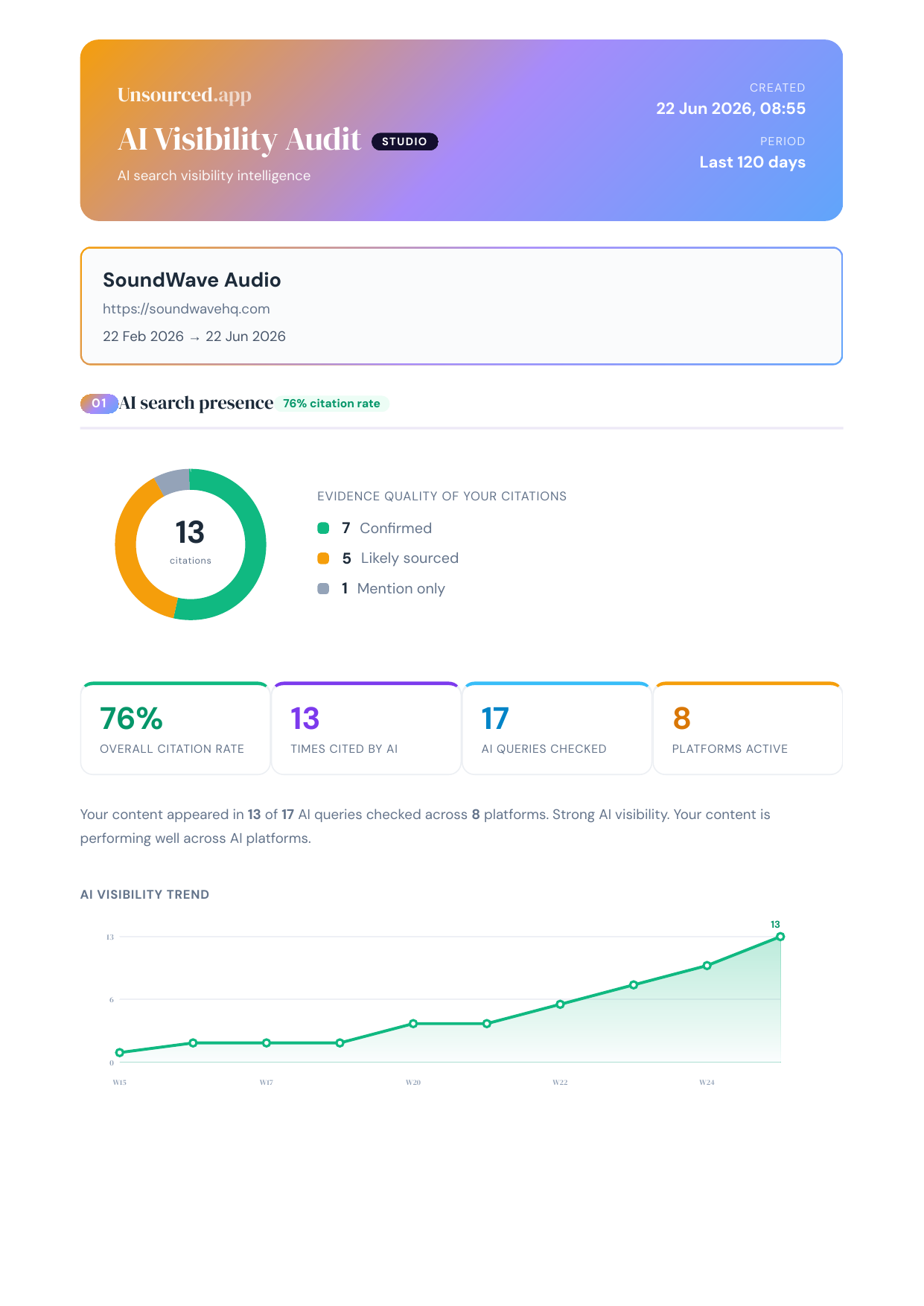
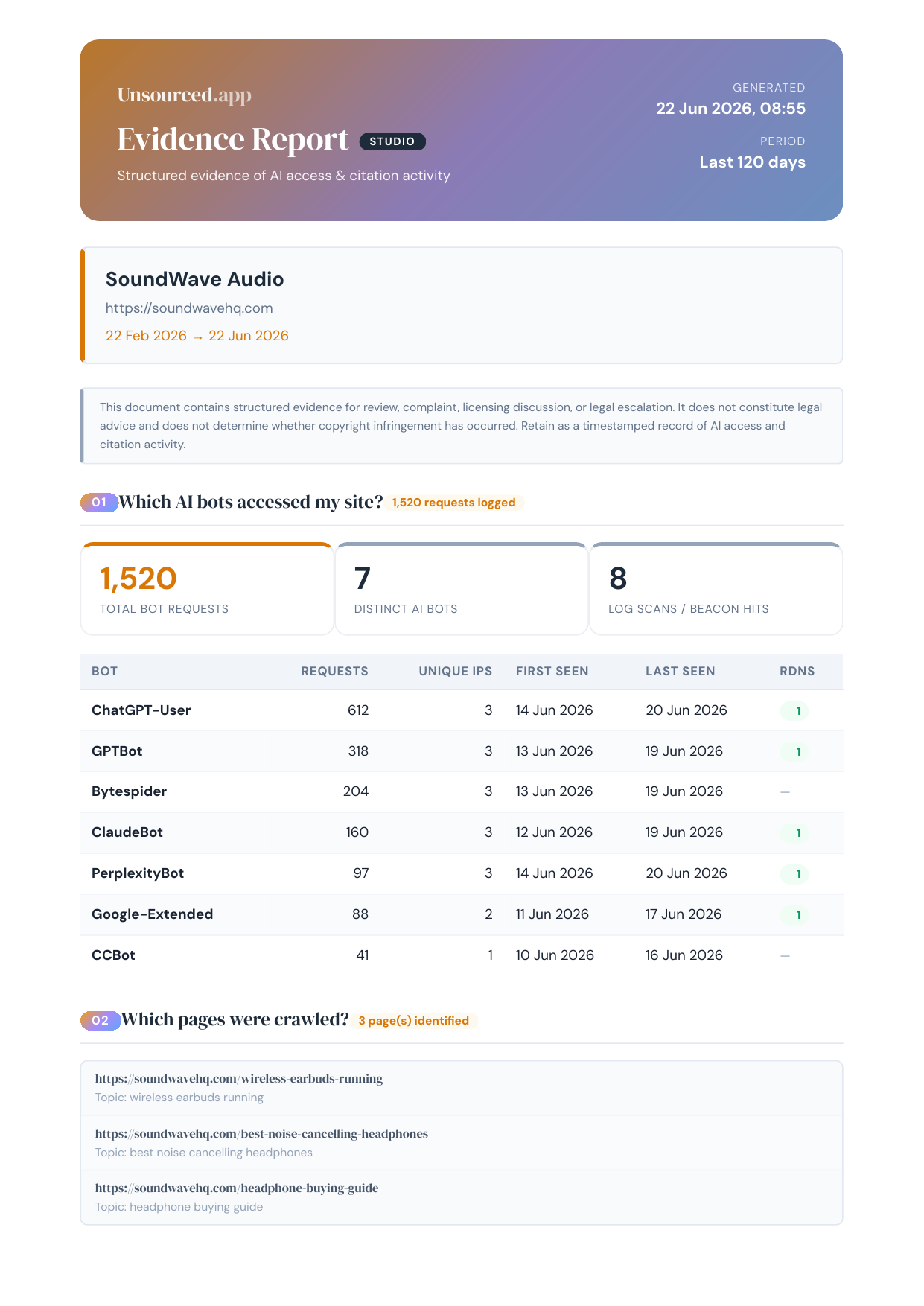
Unsourced is built as the evidence layer for AI search. It tests the questions you already rank for in Google and Bing, logs every citation with the answer and the competitor cited instead, verifies which crawlers are genuinely OpenAI or Anthropic against published IP ranges and reverse DNS, separates a live crawl from training data, and re-checks a topic after you act to confirm a citation only on measured evidence. Every citation is graded honestly as Confirmed, Likely-sourced, or Mention-only. You also get a weekly Monday digest and two downloadable reports built from your own live data, an AI Visibility Audit and an Evidence Report you can hand to a client or your boss, plus a Fleet Overview if you run several sites. It is self-serve from £39 a month with a free trial. Whichever tool you choose, judge it against the criteria above: can it show you the answer, and can it prove the crawl?
Why AI visibility resists a single score
In Unsourced’s own monitoring, across more than 150 versions of questions like “what's the best way to monitor my brand's visibility in tools like ChatGPT and Gemini?” and “is there a tool that tracks whether my company shows up in AI-generated answers?”, AI assistants named hundreds of different tools — and rarely the same one twice from one week, or one rewording, to the next.
That churn is the reason this whole category is hard to score honestly: any single number is an average of answers that won't sit still. The tools below take different approaches to it — but the question worth asking each one is whether it hands you the evidence underneath, or just the number on top.
Common questions
What are AI visibility tools?
They track whether AI assistants such as ChatGPT, Perplexity, Google AI Overviews and Claude mention or cite your website when they answer questions in your topic, the way SEO tools track your position in Google's results. The category is often called GEO (generative engine optimization) or AEO (answer engine optimization).
How do I choose one?
Decide whether you want a visibility score or the evidence behind it. A score is quick to read but estimates the answer; evidence shows you the actual citation, whether a verified crawler fetched your page, and whether a fix moved anything. Then judge each tool against the checklist above and try it on your own site before committing.
More comparisons
Go deeper
What you walk away with
Whichever tool you choose, ask what it hands you. Every Unsourced account generates two reports built from your own live data — open them, check them, hand them to a client or your boss:
About these comparisons
All competitor names, logos and brands are the property of their respective owners and are used here solely for nominative, comparative identification; their use does not imply affiliation with or endorsement by them. Each comparison is drawn from the competitor’s own publicly available information and was accurate as of the date shown — pricing and features change, so check the linked source for current details.
Sign up today and Unsourced starts logging which AI assistants cite you, who is genuinely crawling your site, and whether a fix actually moves a citation.
Sign up free →10-day free trial · no card required · cancel anytime
Run several sites or an agency? Unsourced is built for agencies and has a 20% recurring partner programme.